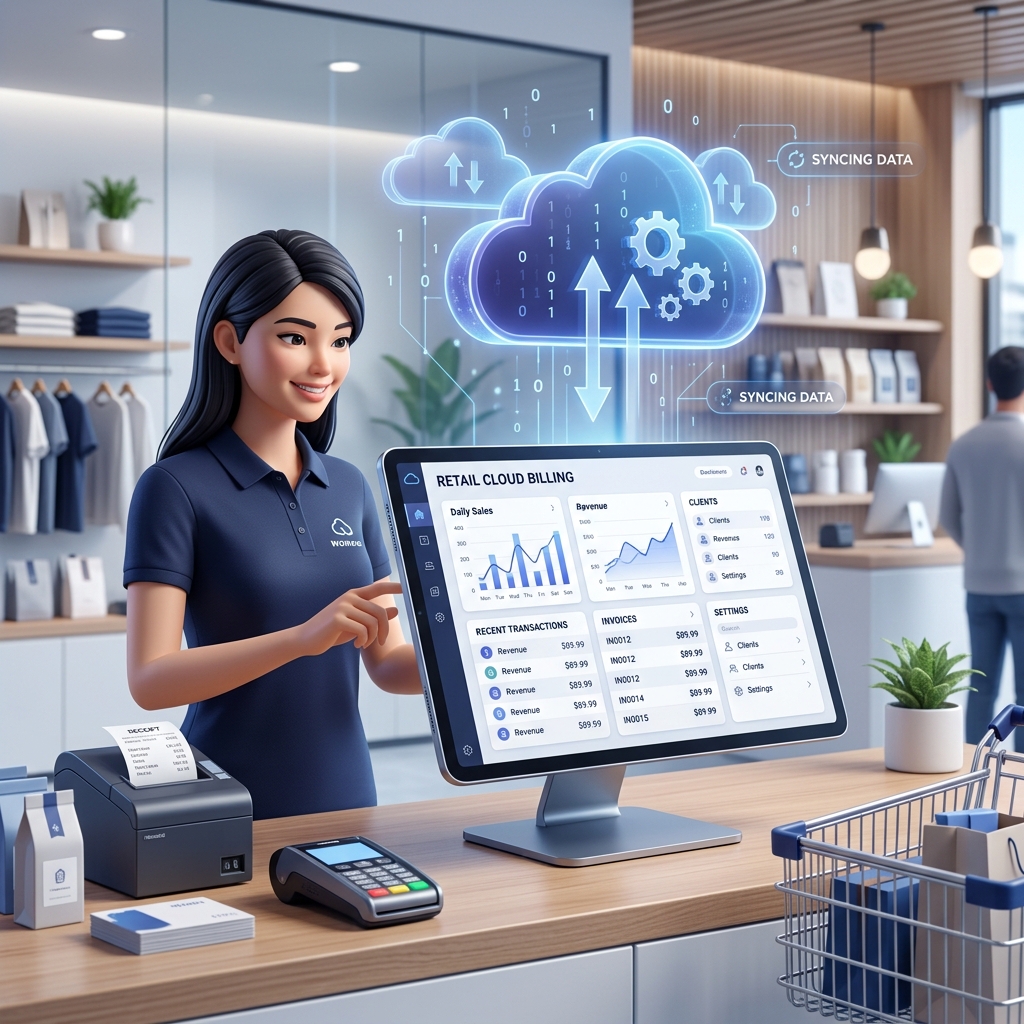
The retail landscape in India is changing faster than ever. As we move through 2026, the traditional paper-based billing or offline desktop software is no longer enough to stay competitive. Customers expect speed, and as a business owner, you need data at your fingertips.
1. Access Your Business from Anywhere
One of the biggest advantages of cloud-based billing like BlinkBill is mobility. Whether you are at home, traveling, or at another branch, you can see your sales, inventory, and staff performance in real-time on your phone or laptop. You are no longer "chained" to the counter.
2. Automatic Data Safety
We've all heard horror stories of hard drives crashing or laptops being stolen, leading to years of lost data. With cloud POS, your data is securely stored in the cloud (using advanced technology like Google Firebase). Even if your hardware breaks, your business data is safe and ready to be accessed on a new device instantly.
3. Seamless GST Compliance
GST regulations frequently update. Cloud software updates automatically to keep you compliant. Generating GSTR reports takes seconds rather than hours of manual calculation, saving you from costly errors and late fees.
4. Better Inventory Control
Cloud systems allow for real-time tracking across multiple locations. If you sell an item in your shop, your inventory is updated instantly. You can set low-stock alerts and manage suppliers without needing to physically count items every day.